


Lisa Ellis is a quilt artist, teacher, and lecturer whose work bridges tradition and innovation. Fascinated by the Cathedral Window block, she explores its interplay of fabric, light, and dimension through a contemporary lens. By working in a series, Lisa reimagines this motif with fresh color palettes, shifting scales, abstraction, and negative space demonstrating how a single form can become a framework for modern expression. She encourages quilters of all levels to use series work to spark ideas, refine skills, and build a cohesive artistic voice.
Lisa’s professional journey began with advanced degrees in Math and Computer Science and a 23-year career in engineering, project management, and executive leadership. Since retiring in 2003, she has dedicated herself to the arts and nonprofit service.
As chair of Sacred Threads, Lisa directed its biennial exhibition of quilts on themes of spirituality, joy, healing, grief, and peace. Though the exhibit has moved from Washington, DC to Indianapolis, she continues to serve as treasurer and mentor to its new leadership team.
Her leadership extends across the quilting community: she is a past President of Studio Art Quilt Associates (SAQA) and currently serves on the boards of the Quilt Alliance and the International Quilt Museum. She also curates Art in Hospitals, a growing initiative that places quilt exhibitions in healthcare settings, where art becomes a source of comfort, connection, and renewal.
Lecture
“Working in a Series – From Traditional Inspiration to Art”
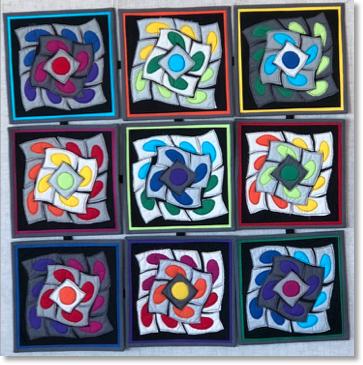
Over 13 years, I have played with the Drunkard’s Path motif and developed a series of art quilts inspired by this traditional block. Using photoshop filters and other design tools, I have morphed tradition into art. This trunk show lecture will inspire you to get creative with the blocks you love.
Workshop
“Reimagine the Classic Cathedral Window”
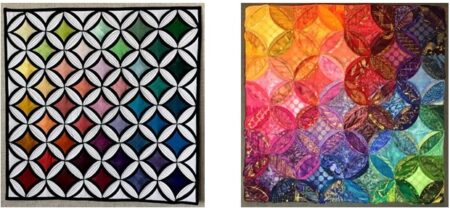
No handwork required! In this workshop, participants will create a fully quilted Cathedral Window project, complete with batting and backing. We’ll begin by learning the foundational technique for this timeless block, then shift our attention to thoughtful design exploration: scale, repetition, negative space, finished size, and intentional scrappiness.